| Nume | Prenume | Rol | Instituție |
|---|---|---|---|
| Dincă | Remus Constantin | Universitatea de Vest, Timişoara | |
| Enache | Sergiu | Universitatea de Vest, Timişoara | |
| Floca | Cristian | Universitatea de Vest, Timişoara | |
| Micle | Dorel | responsabil | Muzeul Civilizaţiei Dacice şi Romane, Deva |
| Oprean | Cristian | Universitatea de Vest, Timişoara | |
| Rogozea | Octavian | Universitatea de Vest, Timişoara | |
| Seculici | Bogdan | Universitatea de Vest, Timişoara | |
| Stavilă | Andrei | Universitatea de Vest, Timişoara | |
| Ţuţuianu | Costin Daniel | responsabil sector | Muzeul Civilizaţiei Dacice şi Romane, Deva |
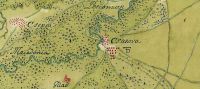
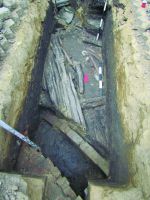
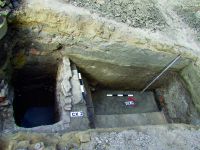
Cercetările arheologice preventive din ”Piaţa Cetăţii”, Oraş Ciacova, jud. Timiş, din vara anului 2015, au fost demarate ca urmare a unor proiecte investiţionale ale Primăriei oraşului, în vederea reabilitării reţelei de apă potabilă. Lucrările s-au desfăşurat în perimetrul Pieţei Cetăţii, pe laturile de N, S, E şi V, în zona din imediata vecinătate a bordurii drumului ce mărgineşte zona centrală a Pieţei. În ...interiorul Pieţei nu s-a intervenit prin săpătură, deoarece aici nu au fost prevăzute lucrări de reabilitare. Stratul superior de pavaj şi/sau de beton s-a îndepărtat manual sau mecanizat, iar substratul de nisip şi moloz s-a îndepărtat mecanizat până la adâncimea medie de 0,5 – 0,8 m după care s-a intervenit manual pentru a nu se distruge evidenţele arheologice. Dată fiind suprafaţa foarte mare de teren ce urma a fi excavată şi datorită faptului că se ştia din documentaţia primită de la serviciul topografic al Primăriei Ciacova de existenţa fostelor săpături pentru introducerea apei potabile din anii 60, precum ce cele mai actuale de telecomunicaţii şi de canalizare, efectuate în anii 2009-2010, metodologia de lucru nu a impus ca o necesitate deschiderea unor secţiuni mai late de 1 m, deoarece, pe cel puţin 2 laturi ale Pieţei (cea de est şi cea de sud), noua reţea de apă potabilă s-a introdus în imediata vecinătate a celei vechi sau chiar deasupra ei. De asemenea terenul era deja bulversat de săparea şanţurilor pentru implementarea canalizării oraşului care a prevăzut introducerea tuburilor de beton la adâncimea de 5 m. Acolo unde în excavarea iniţială a magistralei s-au descoperit straturi antropice nebulversate sau diverse evidenţe arheologice, şanţul a fost mărit la 2 m, pentru o documentare corectă conform standardelor şi procedurilor din România. De asemenea, adâncimea până la care s-a coborât a fost cea a sterilului arheologic. Chiar şi acolo unde nu a fost necesară lăţirea secţiunii la 2 m pentru că deja terenul era bulversat de lucrările mai vechi (menţionate mai sus), s-a dispus verificarea prin sondaje a stratigrafiei verticale până la atingerea sterilului pentru a se documenta topografia terenului din perioada medievală. Singurele evidenţe arheologice descoperite în urma săpăturilor se concentrează în zonele de nord-vest şi sud-vest, unde au fost descoperite următoarele: • În latura de nord a Pieţei Cetăţii s-au identificat urmele a două stradele din lemn, dezafectate, probabil în preajma cuceririi austriece, din ele păstrându-se doar patul din crengi ce forma structura inferioară a stradelei destinată a consolida terenul mlăştinos şi a drena apa pluvială. Cele două stradele converg către un punct aflat azi în latura de nord a Pieţei, sub casele construite acolo, dar unde în perioada otomană exista un pod de legătură între Piaţă şi Cetate, peste canalul cu apă ce înconjura fortificaţia. • În colţul de NV al Pieţei a fost identificată o încăpere mică din cărămidă, cu laturile de 1,2x1,5m, cu o utilitate tehnică, ce făcea parte, probabil, din corpul unei mori de apă, aflată la confluenţa micului pârâu ce se vărsa în canalul ce înconjura Cetatea, curgând dinspre sud spre nord. • Tot în colţul de NV al Pieţei a fost identificată o stradelă din grinzi de lemn, cu orientarea SV către NE, către acelaşi pod peste canalul ce înconjura Cetatea. • În acelaşi loc, stradela din lemn este parţial distrusă de un jgheab din cărămidă cu lăţimea de 1,2 m, construit în prima fază a perioadei ocupaţiei habsburgice, pentru a canaliza micul pârâu afluent stânga al Timişului Mort şi ai mări presiunea pentru a eficientiza moara de apă ce se afla în acest loc (ea fiind reprezentată şi pe prima ridicare topografică militară iosefină datată în 1769-1772). • În colţul de sud-vest al Pieţei Cetăţii, a fost identificat urma canalului aceluiaşi mic pârâu ce curgea dinspre sud spre nord, ce punea în mişcare moara din faţa Cetăţii, dar care aici nu mai e căptuşit cu cărămidă, surprinzându-se doar şanţul săpat în pământ, cu laturile întărite cu lut, având lăţimea de 1,6 m. În concluzie, ca urmare a investigaţiilor arheologice pe toate cele patru laturi ale pieţei actuale, s-a constatat faptul că informaţiile oferite de cartografia istorică (Mappa von dem Csakowaer District, 1723 - Österreichisches Staatsarchiv, Kriegsarchiv; Banat Josephinische Landaufnahme, 1769-1772, Historische Militärkarte der österreichisch-ungarischen Monarchie - Österreichisches Staatsarchiv, Kriegsarchiv; pe Zweite oder Franziszeische Landesaufnahme, 1806-1869, Historische Militärkarte der österreichisch-ungarischen Monarchie - Österreichisches Staatsarchiv, Kriegsarchiv) sunt reale, zona din faţa Cetăţii Ciacova fiind în Evul Mediu un spaţiu viran. Existau doar câteva drumuri din pământ care, în perioada ocupaţiei otomane, au fost podite cu lemn, în zona din imediata vecinătate sudică a Cetăţii. Tot în această perioadă exista un curs natural al unui pârâu ce curgea dinspre sud spre nord, prin latura vestică a Pieţei şi care alimenta Moara care se afla construită la confluenţa acestui mic pârâu cu canalul ce înconjura cetatea. Acest pârâu a fost canalizat în perioada habsburgică, dar în timp a fost complet desecat, dispărând din topografia actuală a Pieţei Cetăţii.
Preventive archaeological excavations in “Piaţa Cetăţii” (Engl. City Square), Ciacova, Timiş County, in the summer of 2015 started because of investments by the Ciacova Town Hall aiming at rehabilitating the drinking water network.
Excavation works were carried out within the City Square perimeter, North, South, East and West, in the close vicinity of the road delimitating the central area of the Square. There was no digging within the Square, because there was no rehabilitation work to carry out there. The upper layer made of stone pavement and/or concrete was removed manually and the under layer of sand and debris was removed mechanically down to 0.5-0.8 m, after which we acted manually to prevent destroying archaeological evidence.
Given the very large land area to be excavated and because we knew, from the documents from the land survey service of the Ciacova Town Hall, about the existence of the former excavations carried out in 2009-2010 for the introduction of the drinking water network in the 1960s, the working methodology did not ask the opening of sections wider than 1 m (on at least two sides of the Square – eastern and southern – the new drinking water network was set in the close vicinity of the old one or right above it). The land was already ravished by ditches for the town sewage system that consisted in introducing concrete pipes 5 m down in the soil.
Where, in the initial excavation of the main pipe, we discovered untouched man-made layers or different archaeological evidence, the ditch was enlarged to 2 m for proper documenting according to Romanian standards and procedures. Likewise, the digging depth was that of archaeological sterile. Even where we did not have to enlarge the section to 2 m because the land had already been ravished by older works (as mentioned above), we sound checked the vertical stratigraphy down to the sterile to document the Middle Ages land topography.
The only archaeological evidence following the excavations was concentrated in the north-west and southeast:
• On the northern side of the City Square, we identified the traces of two narrow wooden streets that were no longer used maybe close to the Austrian conquest: what has remained of the two streets was the branch bedding making up the lower structure of the street meant to consolidate the marshy land and to drain the rain water. The two streets converged towards a point located on the northern side of the Square, underneath the houses built there, but where, during the Ottoman period, there was a bridge connecting the Square and the Fortress, over the moat that surrounded the fortification.
• In the north-west corner of the Square, we identified a small room (1.2 x 1.5 m) made of brick whose use was technical and that most probably was part of a water mill: it was located at the confluence of the small creek that flew from south to north into the moat surrounding the Fortress.
• In the same corner of the Square, we identified a narrow street made of wood beams going from south-west to northeast towards the same bridge over the moat surrounding the Fortress.
• In the same place, the wooden street was partially destroyed by a brick trough 1.2 m wide built in the first period of the Habsburg occupation to direct the creek flowing from the left into the Timişul Mort and to increase its pressure and make work the water mill (it was also represented by the first military Josephine land survey from 1769-1772).
• In the southern-western corner of the City Square, we identified the traces of the canal of the same small creek flowing from south to north, making the water mill work: in this location, it was no longer padded with bricks but coated with clay and measuring 1.6 m wide.
As a conclusion, as a result of archaeological investigations on all four sides of the nowadays’ square, we could see that the information supplied by historical mapping (Mappa von dem Csakowaer District, 1723 – Österreichisches Staatsarchiv, Kriegsarchiv; Banat Josephinische Landaufnahme, 1769-1772, Historische Militärkarte der österreichisch-ungarischen Monarchie – Österreichisches Staatsarchiv, Kriegsarchiv; Zweite oder Franziszeische Landesaufnahme, 1806-1869, Historische Militär karte der österreichisch-ungarischen Monarchie – Österreichisches Staatsarchiv, Kriegsarchiv) are real: the area in front of the Ciacova Fortress was, in the Middle Ages, a lane. There were only two earth roads that had been paved with wood during the Ottoman occupation, in the close vicinity of the Fortress (south). At the same time, there was a natural creek flowing from south to north through the western side of the Square and that made the water mill located at the confluence with the moat work. The creek was turned during the Habsburg period, into a canal and was subsequently completely drained, thus disappearing from the current topography of the City Square.
Borovszki, 1912: Borovszki S., Temes varmegye, Budapest, 1912.